

Best Outdoor Fitness Trackers Compared for Active Lifestyles
A fitness tracker stands up to outdoor use through water resistance, rugged build, and reliable sensor performance in changing weather. Models designed for hiking, trail running, or cycling usually offer reinforced casings and at least IP68 protection, while battery life often runs three days to two weeks depending on GPS use. Heart rate sensors and altimeters in premium devices handle rapid shifts in temperature or altitude better than entry-level options, but accuracy can still dip by up to fifteen percent in dense forests or steep canyons. Some trackers add solar charging or offline maps, features rarely found below the two hundred dollar range.
Durability and precise location tracking become critical when conditions turn wet or when routes stray far from mobile coverage. Tradeoffs between screen visibility in sunlight, comfort during long sessions, and the weight of extra sensors can impact which model fits a specific adventure.
Most fitness trackers lose GPS signal or offer less reliable readings when tree cover is solid or mountains block the horizon, which can distort both route and activity data.
Which trackers handle rough conditions best
Garmin Instinct and Suunto 9 Peak stand out for surviving drops, dust, and immersion. Their casings use reinforced polymer or titanium, with mineral glass or sapphire faces. Both remain operational in rain, mud, and freezing weather without losing tracking accuracy.
Apple Watch Ultra offers high water resistance but can scratch more easily than the sapphire lens on the Suunto. Garmin’s buttons work even with gloves or wet hands, giving it an advantage in harsh cold or when hands are dirty.
Rugged design and physical controls prevent failure where touchscreens struggle. Devices with military grade certification and long battery life keep tracking outdoors even during extended trips.
How accuracy varies between models
Fitness trackers use a mix of motion sensors, optical heart rate monitors, and satellite signals to record activity outdoors. Accuracy depends on both hardware quality and software algorithms. Models with better sensors and faster processors tend to produce more reliable data, especially during intense movement.
Multi frequency GPS in newer devices reduces signal drift when tall buildings or dense trees block satellites. Chest strap heart rate sensors still outperform wrist-based versions during running or interval training. Some older trackers often inflate step counts due to sensitivity to arm swings or vibrations from cycling.
Garmin and Coros models with multi band GPS and advanced heart rate sensors consistently report more precise outdoor data than basic models or many smartwatches. Miscounts from poor tracking can lead to misleading training feedback or missed health warnings.
What features really matter outdoors
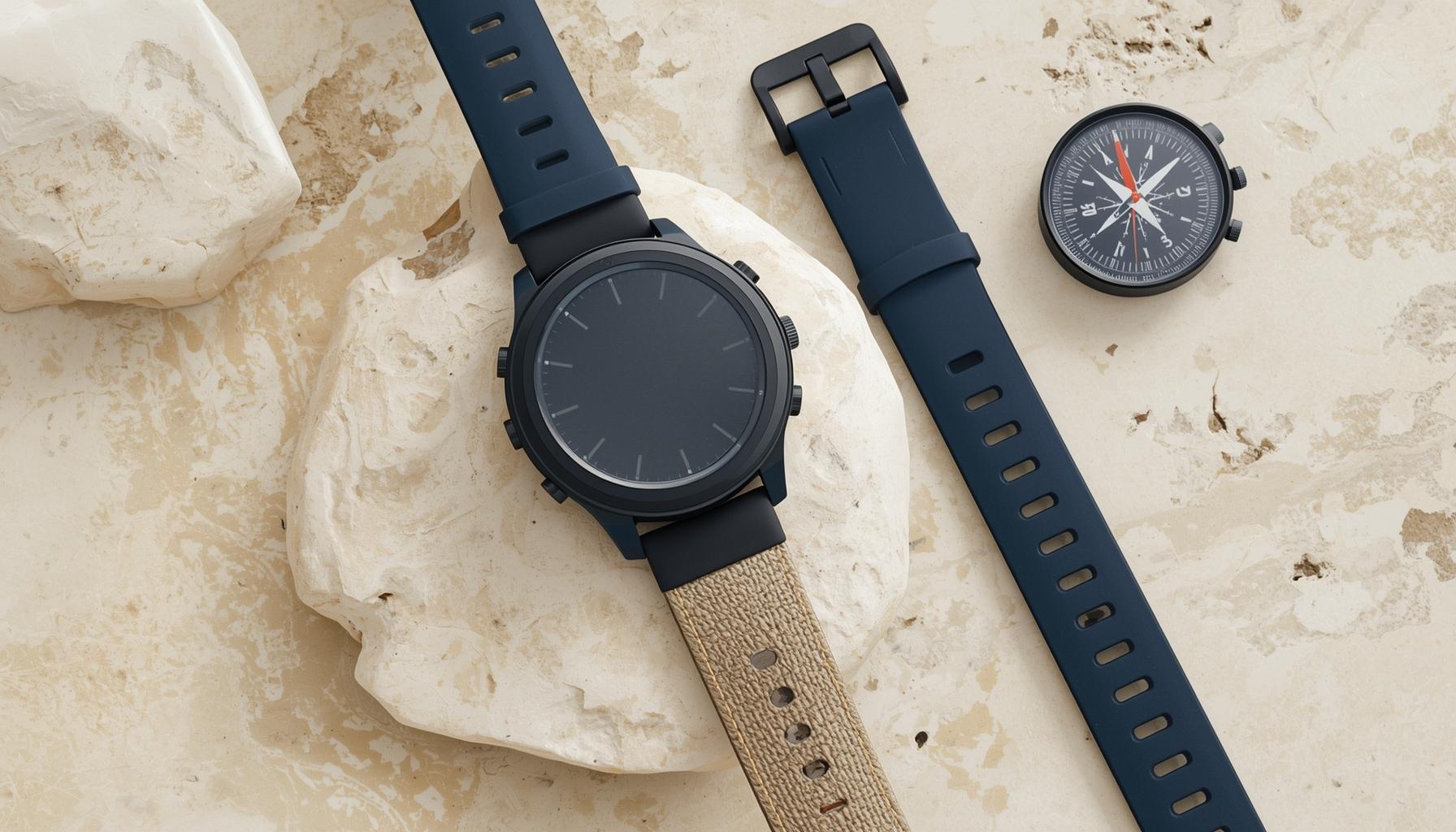
Rugged terrain, shifting weather, and long distances put unique demands on outdoor fitness trackers. Accurate GPS and reliable battery life can mean the difference between finishing a trail safely or losing track of location. Some features enhance the experience, while others add complexity without practical value in the wild.
Navigation and mapping tools compared
Satellite accuracy drops sharply under dense tree cover or near cliffs, and only some fitness trackers can compensate for this. Real outdoor navigation depends less on flashy screens and more on signal reliability and map clarity.
| GPS type | Map access | Route planning | Ease of use |
|---|---|---|---|
| Dual frequency GPS | Full topographic maps | Automatic rerouting on detours | Large textured buttons |
| Single frequency GPS | Basic line maps only | Manual waypoint input | Touch screen icons |
| GLONASS and GPS | Preloaded trail maps | Route storage up to 50 tracks | Physical side buttons |
| Cellular-assisted GPS | Streaming map tiles | Live route sync with phone | Voice prompts |
| Barometric altimeter with GPS | Elevation mapping | No on-device planning | Menu-driven interface |
Topographic maps on the device itself reduce the risk of losing the route when signal bars vanish. Physical buttons work best with gloves or in wet conditions where touch screens often fail.
Battery life for long adventures
Remote trails and multi day events often expose weaknesses in battery management. Unexpected cold snaps or extended GPS tracking can drain even premium devices much faster than advertised.
Tests on a two day mountain hike revealed that most fitness trackers with always on heart rate and GPS enabled died within fifteen hours. Only a few models with ultra low power modes remained active past the second sunrise. Wrist devices with color displays, though easier to read, lost charge faster than those with monochrome screens.
One device handled a full marathon and a daylong climb on a single charge, but only when idle functions like music storage were disabled. Another tracker that boasted quick charge features still failed during an overnight trek, leaving a gap in the activity log just before the summit. Charger compatibility also proved critical: proprietary charging cradles forced one group to ration usage when replacement cables were forgotten.
Anything below twenty four hours of continuous GPS is a liability for overnight trips. Features like solar recharging or removable batteries can make a decisive difference on routes far from power outlets.
Satellite navigation, water resistance, and long battery life consistently prove their worth far from city streets. Choosing trackers with real outdoor advantages prevents frustration and helps avoid risky situations.
Who should avoid certain tracker types
Athletes who train for water sports or triathlons often struggle with standard wrist-based fitness trackers. Many models lack waterproofing or accurate swim tracking, limiting their usefulness in aquatic environments. Devices designed for runners or cyclists may also miss critical data underwater, leading to incomplete performance records.
Trail runners and hikers in remote areas face issues with trackers that depend on frequent phone syncing or weak GPS chips. A tracker that loses signal in dense forest can compromise safety by failing to record routes or alert for emergencies. In contrast, high-end outdoor watches with robust GPS and offline mapping perform reliably even when cellular coverage disappears.
Misaligning tracker features with intended activities leads to poor data, missed goals, and frustration. Choosing a device solely for style or price, without evaluating activity demands, often results in disappointment and wasted investment.